Covey connects personal effectiveness with the way we work with other people. His framework moves from dependence to independence and then interdependence: first learning to direct ourselves, then learning to cooperate. The seven habits are an ongoing practice, not a checklist to finish.
The seven habits at a glance
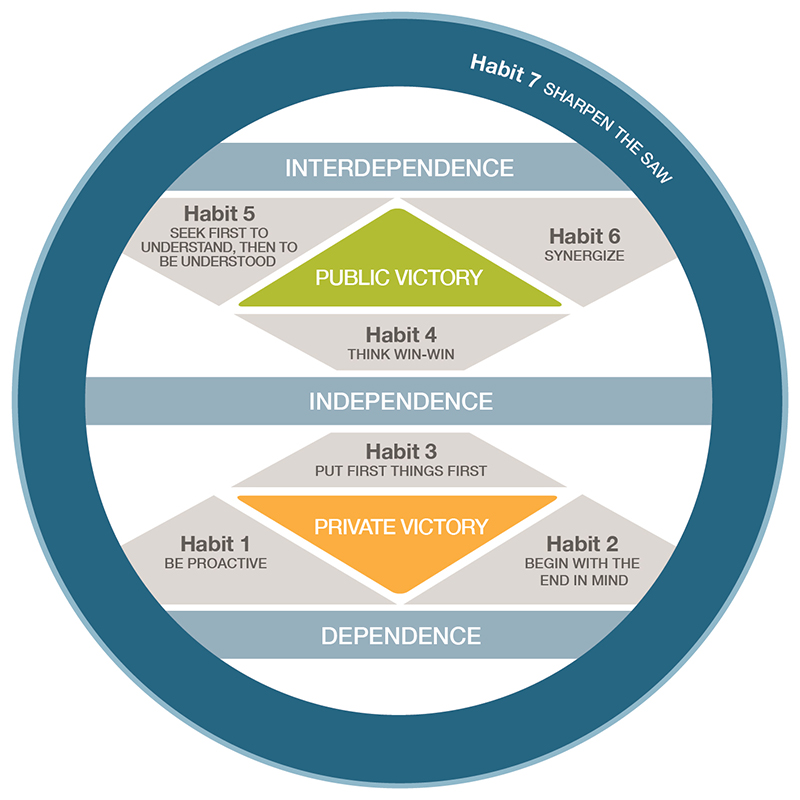
What each habit asks of us
Be Proactive
Choose your response and act on what you can influence. Responsibility does not mean being able to control every circumstance.
Begin With the End in Mind
Clarify the values and purpose that should guide your choices. Consider what you want your work and life to stand for before deciding what to do.
Put First Things First
Give time to important work, including preparation, relationships and prevention. Urgent demands should not automatically determine your priorities.
Think Win-Win
Look for arrangements that benefit all parties. This requires both consideration for others and the courage to express your own needs.
Seek First to Understand, Then to Be Understood
Listen to understand another person’s perspective before explaining yours. Understanding someone does not require agreeing with everything they say.
Synergize
Use differences to create a better approach together. The aim is a new possibility that neither person could have reached alone.
Sharpen the Saw
Renew your physical, mental, social/emotional and spiritual capacities. In this framework, spiritual renewal concerns meaning and values; renewal sustains the other six habits.
The movement toward interdependence matters: cooperation is stronger when people can exercise their own judgment and take responsibility. Personal discipline and good relationships are developed together.
- FranklinCovey · The 7 Habits
- Habit 1 · Be Proactive
- Habit 2 · Begin With the End in Mind
- Habit 3 · Put First Things First
- Habit 4 · Think Win-Win
- Habit 5 · Seek First to Understand, Then to Be Understood
- Habit 6 · Synergize
- Habit 7 · Sharpen the Saw
Overview based on the book’s framework and FranklinCovey’s official explanations. The descriptions are paraphrases.